Thankfulness and generosity go hand-in-hand. When we consider the blessings that God has bestowed upon our lives, we are filled with the desire to not only tell others how God has blessed us, but to be a blessing to others ourselves. When others see the joy we have in the LORD and His blessings upon us – especially His gift of eternal salvation He purchased for us with the precious blood of Jesus – they will be filled with the desire to know that joy and peace for themselves.

In his letters to the churches at Ephesus and Corinth, the apostle Paul tells all Christ followers that God’s Holy Spirit living within us gives us specific and varied spiritual gifts to be used for building and strengthening His Church. Paul’s missionary companion Barnabas consistently and fully applied the spiritual gift of encouragement that he had been given. In fact, the nickname Barnabas that the apostles gave him means “son of encouragement,” reflecting his obedience to God’s calling. Barnabas’ gift of encouragement isn’t as spectacular as some other spiritual gifts like prophecy and healing. But encouragement from the Holy Spirit given through God’s chosen vessels like Barnabas is nevertheless vital to the health and strength of the Church, and indeed the world at large.

The account found in Acts 9 of Saul of Tarsus’ transformation into Paul the apostle after Jesus appeared to him on the road to Damascus is perhaps the best known example of God’s desire and the power of His Spirit to restore seemingly irredeemable, deeply flawed people into His instruments for accomplishing His purposes. God used Paul mightily to establish and nurture His Church throughout the Mediterranean basin despite the initial misgivings of the Christ followers whom Saul had previously persecuted. Saul’s supernatural transformation into Paul is a great encouragement for us. God continues today to redeem and restore even the most seemingly hopeless sinners and then put us to work as His representatives to reach our lost world with the restorative Gospel of Jesus Christ.

In the Garden of Gethsemane on the night He was betrayed, Jesus prayed that His disciples would be one just as He and the Father are One. But that doesn’t mean we should be cookie-cutter duplicates of one another – all striving under our own power and by our own will to do the same old things we believe are “the right things to do.” Rather, it means that we should be united under the guidance of God’s Spirit that by His power and in His will we may apply the individual spiritual gifts that He has given all of His children. If we rely upon our own power to accomplish the things we ourselves have determined, we will be ineffective in accomplishing the mission God has assigned to us – to share the Gospel of eternal salvation in Jesus alone, and to raise up disciples of Jesus to carry on the mission of building God’s Kingdom together in true unity of mind and spirit.

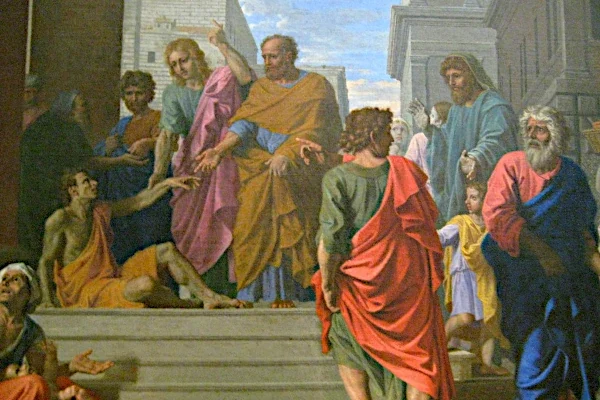
Jesus warned His apostles that they would be brought before rulers to give a defense for their Gospel testimony and that they were not to wonder what they would say in those moments – that God’s Spirit would give them the right words at the right time. Such was the case when Peter and John were brought before the Sanhedrin to explain by what power and in whose Name they had healed a lame man and were preaching the Gospel. Filled with the Holy Spirit, Peter gave a powerful testimony, saying that there is only one Name given by whom we must be saved – the Name of Jesus of Nazareth. After they were released and reported what had happened to the other disciples, all of them offered prayers of thanks and praise giving God all the glory for the miraculous healing and for Peter and John’s release. In response, God’s Spirit powerfully shook the place they were praying.

Throughout history, God has placed His Spirit upon various people at various times for His good purposes. We see a good example of this in the book of Numbers chapter 11 when God poured out His Spirit upon the leaders of the clans of Israel in response to Moses’ cries for help. But many years afterward, the prophet Joel foretold that God would one day pour out His Spirit upon all people. The fulfillment of that prophecy came just a few days after Jesus ascended back to His Father on the day of Pentecost when the Holy Spirit came upon Jesus’ apostles just as He had promised at the last supper, and reiterated just before He was taken up.

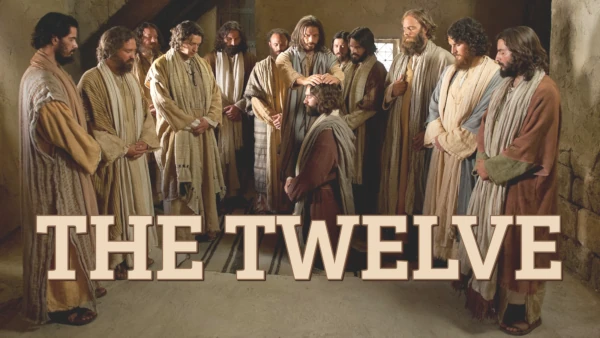
The final three of Jesus’ chosen twelve apostles – James the son of Alphaeus, Simon the sealot, and Thaddaeus – are largely unsung. Almost nothing is written in God’s Word about them apart from the listings of their names among the twelve. Yet we know Jesus chose them specifically for His own perfect reasons. Therefore, they serve as encouragement to those who quietly serve the kingdom of God without any fanfare.

Matthew was by profession a collaborator with the hated Roman occupiers, and tax collectors in general were seen as extortioners and oppressors. Jesus chose Matthew in part due to his skills as a scribe. Matthew immediately and completely obeyed Jesus’ command to follow Him.

Jesus gave the two sons of Zebedee – James and John – the nickname Boanerges meaning “Sons of Thunder.” Although this name is found only once in scripture, we are intrigued by it because we can imagine several reasons why Jesus might have tagged the brothers with it. James (sometimes called James the greater) was one of three apostles in Jesus’ so-called “inner circle” along with his brother John and Simon Peter. These three were present with Jesus when He was transfigured before them. This inner circle were among seven of The Twelve to whom Jesus appeared on the shore of the Sea of Galilee following His resurrection. After Jesus ascended to His father, James was one of the leaders of the early church in Jerusalem. Of course, Judas Iscariot was the first of the twelve to die, but James Son of Zebedee became the first of the twelve to be martyred for his Christian testimony when Herod had him executed.