A special meeting of church members will be held immediately following our morning worship service on Sunday, October 25th to choose between the proposed designs submitted by the church expansion team at our last quarterly business meeting. Please contact Pastor Brian with any questions or concerns.

John – who refers to himself as “the disciple whom Jesus loved” – was the human scribe who wrote five books of the New Testament. John was part of Jesus’ inner circle of chosen apostles who was present at the Mount of Transfiguration along with his brother James, and Simon Peter. From the cross before He died, Jesus entrusted the care of His mother Mary to John. Of the remaining 11 after Judas Iscariot died, only John was not put to death for his Gospel testimony as far as we know from the scripture itself.
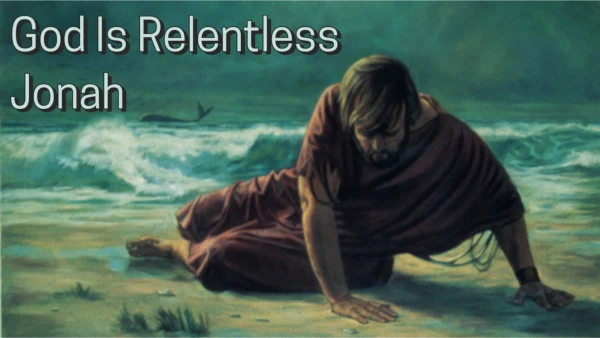

All of the events that took place during Jonah’s mission to Nineveh occurred in accordance with God’s will and by God’s power. When Jonah tried to run away from God’s calling, God relentlessly pursued Him, and made it possible for Jonah to be redeemed out of death by His provision of the great fish that swallowed him. Jonah understood all this, and cried out to God for salvation knowing that God would hear his prayer and answer him in accordance with His plan and His will out of His abundant mercy and grace. God had a purpose for Jonah who hadn’t yet fulfilled it.

Jesus gave the two sons of Zebedee – James and John – the nickname Boanerges meaning “Sons of Thunder.” Although this name is found only once in scripture, we are intrigued by it because we can imagine several reasons why Jesus might have tagged the brothers with it. James (sometimes called James the greater) was one of three apostles in Jesus’ so-called “inner circle” along with his brother John and Simon Peter. These three were present with Jesus when He was transfigured before them. This inner circle were among seven of The Twelve to whom Jesus appeared on the shore of the Sea of Galilee following His resurrection. After Jesus ascended to His father, James was one of the leaders of the early church in Jerusalem. Of course, Judas Iscariot was the first of the twelve to die, but James Son of Zebedee became the first of the twelve to be martyred for his Christian testimony when Herod had him executed.

The story of the prophet Jonah gives us a classic example of God’s relentless pursuit of His children no matter how long or far we try to run away from His calling and no matter how stridently we rebel against His commands. God mostly draws us gently and lovingly to Himself, but sometimes – as in Jonah’s case – He allows us to fall down to rock bottom before He reaches out to redeem us. God desires us to enter into loving fellowship with Him, and He never stops calling out for us to return to Him.

We can and should pray fervently for revival, but revival is ultimately a work of God’s Spirit alone. We see this demonstrated in Ezekiel 37 when God led the prophet out into a valley full of dead, dry bones and asked Ezekiel pointedly whether those bones could ever live again. Ezekiel was honest in his answer. He didn’t know, but he recognized that God knows all things and can accomplish anything – even restoring those bones to life. Ezekiel was obedient when God commanded him to preach God’s Word to the bones. In response, God knitted the bones back together but they remained as lifeless corpses. Then God commanded Ezekiel to pray for God’s Spirit to breathe life back into the corpses, and God then brought the corpses back to life with His Spirit.

As we pray we must do so in the sure knowledge that God also desires revival in us and through us. We must pray with the expectation, that God will indeed fulfill all the promises we find in His Word regarding our Spiritual revival.

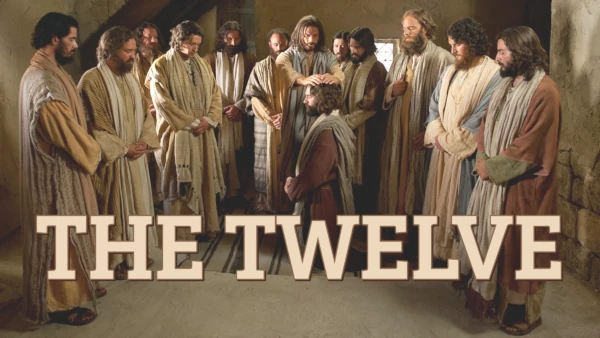
Simon – whom Jesus named Peter (or Cephas) – is found listed first in all the Biblical listings of Jesus’ chosen apostles. So it is appropriate for us to begin our study of “The Twelve” with Simon Peter. For many of us, Simon Peter is the apostle with whom we identify most closely. In this study, we look at Simon’s progress from sinful and worldly fisherman through his time with Jesus as one of His closest followers to his denial of Jesus on the night He was betrayed and his subsequent restoration by the resurrected Jesus until finally Peter became a mature and bold fisher of men that Jesus promised to make him in the years after Jesus ascended back to His Father.

In our lives as Christ followers, we can sometimes experience periods of spiritual drought. During such times, God’s Word encourages us to recall the joy of our salvation we felt when we first came to know the LORD Jesus, and to return to the love we felt for Him when we first realized that He loves us. The church in Ephesus is a vivid example of this falling away and Jesus’ stern warning to repent and remember our first love.

The Twelve apostles of Jesus were not outstanding in any way, at least before they met Jesus. However, Jesus called these men personally. He knew all their flaws, faults, and apprehensions, yet He still chose them.

This message reminds us that “all” human life is valuable to God. If the people of God truly desire “revival” in their life and in the life of their church, then God’s people must recognize how sacred life is. What must follow is love for God and love for “all” our neighbors.