A special meeting of church members will be held immediately following our morning worship service on Sunday, October 25th to choose between the proposed designs submitted by the church expansion team at our last quarterly business meeting. Please contact Pastor Brian with any questions or concerns.

Colossians and Ephesians were written by Paul the apostle from house arrest in Rome as he awaited his trial before Caesar. We will study this entire letter over the next few weeks. Colossae was a city in Asia Minor which had a large Jewish population including some Jews who had become Christian believers after hearing the Truth of the Gospel of Jesus from Epaphras. Paul wrote this letter to remind the Colossians that salvation in Christ results from knowing Jesus as our personal savior and having a relationship with Him – continually growing in knowledge of God, not from any other “secret” knowledge (Gnosos) or through any form of legalistic works.

As we celebrate Fathers Day, it is helpful to look at how Jesus modeled His own relationship with His father during His ministry on Earth. The defining characteristic of that relationship is connection. Jesus was in continual communication with His Father as He accomplished the mission on Earth that He was given by God the Father. Then, by dying on the cross in our place, Jesus made the way for us to enter into that same kind of relationship with God.

In finishing up our series on God’s grace, it’s important to remember that it is certainly God’s grace alone through which we are saved out of death in our sins – His saving grace, and His grace is sufficient for us to carry us through whatever we might encounter in this life – His sustaining grace. Along the way, God’s grace is perfecting us day-by-day into the very image of God’s Son Jesus – His sanctifying grace. Finally, throughout this life and our eternal life to come, God’s grace is and will forever be poured out in infinite measure upon His children who have believed on the Name and Gospel of Jesus for salvation – God’s securing grace.

Our salvation is a three-fold process. We are justified (our eternal life is secured) by God’s saving grace through Jesus’ death on the cross in our faith in His resurrection. This begins the second phase in which we are being perfected into the very image of our Savior Jesus through God’s sanctifying grace.

sustaining grace, God will always provide for our needs and give us the strength we need to sustain us through times of hardship. Jesus Himself confirmed this truth in His Sermon on the Mount (Matthew 6:25-34). Yet we must be careful to note that God never promised that we would not encounter troubles in this life, but that by His infinite grace He will always sustain us through them.

In Mark’s version of the so-called “Olivet Discourse” we find Jesus’ answer to His disciples’ question of when the end of the (church) age would be and what would be the signs of His coming (again). Jesus explained that no one knows when the end will be – not even Him, but only His Father. Therefore, He strongly admonished them (and us) to be continually watchful for His coming. In the meantime, we must be about the mission He assigned us to preach the Gospel throughout the world.

Jesus’ resurrection which we celebrate at Easter is the single most important event in all of history. The very definition of what it means to be a Christian is our belief in His resurrection. But just as importantly, Christians must understand that the reason Jesus was born into human flesh in the first place was to die on the cross in our place to take upon Himself God’s righteous judgment of death for our sins. Jesus’ resurrection demonstrates His power and victory over death and His invitation for us to join Him in resurrection out of death into eternal life together with Him through faith in His Gospel. Furthermore, Christians believe with eager anticipation Jesus’ promise to return one day to rule and reign eternally over all creation.

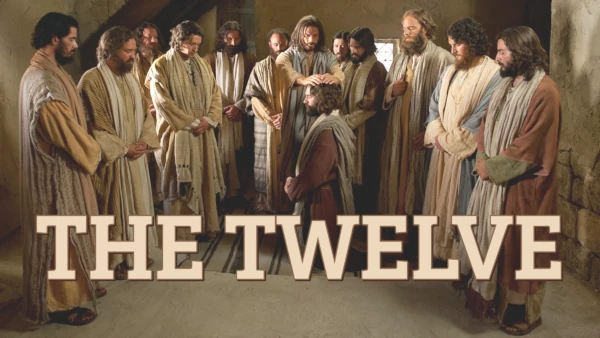
The final three of Jesus’ chosen twelve apostles – James the son of Alphaeus, Simon the sealot, and Thaddaeus – are largely unsung. Almost nothing is written in God’s Word about them apart from the listings of their names among the twelve. Yet we know Jesus chose them specifically for His own perfect reasons. Therefore, they serve as encouragement to those who quietly serve the kingdom of God without any fanfare.

The story of the “Triumphal Entry”is a familiar one. Many of those who celebrated His coming on this day were the same ones who would cry “Crucify Him” a few days later. Why? Jesus the servant King who came to Jerusalem that day was not the conquering warrior King Messiah they had been expecting.

Most of us think of Judas Iscariot as the great villain of the Bible. We revile him nearly as much as we do Satan. Yet Jesus chose Judas to be an apostle. This raises a number of challenging questions and serves as a caution that any of us can fall victim to temptation.