The final three of Jesus’ chosen twelve apostles – James the son of Alphaeus, Simon the sealot, and Thaddaeus – are largely unsung. Almost nothing is written in God’s Word about them apart from the listings of their names among the twelve. Yet we know Jesus chose them specifically for His own perfect reasons. Therefore, they serve as encouragement to those who quietly serve the kingdom of God without any fanfare.


Most of us think of Judas Iscariot as the great villain of the Bible. We revile him nearly as much as we do Satan. Yet Jesus chose Judas to be an apostle. This raises a number of challenging questions and serves as a caution that any of us can fall victim to temptation.

Matthew was by profession a collaborator with the hated Roman occupiers, and tax collectors in general were seen as extortioners and oppressors. Jesus chose Matthew in part due to his skills as a scribe. Matthew immediately and completely obeyed Jesus’ command to follow Him.

Thomas gets a bad rap and the common nickname “Doubting Thomas” due to the well-known stories from the gospel of John in which Thomas first refused to believe the other apostles’ report about the resurrected Jesus appearing to them, and then a week later Jesus’ mild rebuke of Thomas saying, “Be not unbelieving, but believing.” But does Thomas really deserve our scorn and ridicule. After all, the other apostles refused to believe the report from the women to whom Jesus appeared at the empty tomb until He appeared to them later. Furthermore, once Thomas touched and saw the resurrected Jesus for himself, his faith in the Gospel was fulfilled as he fell down in worship declaring, “My LORD and my God!”

The name Nathanael isn’t found in the Biblical listings of Jesus’ twelve chosen apostles. Most likely, Nathanael was the given name of Bartholomew – son (Aramaic “bar”) of Tolmai. From the story of his calling we find in John 1:43-51, we can safely infer that Nathanael was a close friend of Philip. From that story, we also learn that Nathanael was from Cana in Galilee where Jesus transformed the water into wine – the first miracle Jesus performed during His earthly ministry. Nathanael was also present with six other disciples of Jesus at the Sea of Galilee on the day Jesus took Peter aside to restore him after his denial on the night Jesus was betrayed.

Our information from scripture about Philip is limited, so we need to infer what we can about Philip from these few mentions of him taking care not to read anything into the scripture. We see that Philip was called directly and individually by Jesus to be one of His apostles. We also see in the story of the feeding of the 5,000 that Philip was somewhat pedantic and literal in his understanding of the lessons Jesus taught him. When he was approached by some Greeks who wished to see Jesus, Philip was cautious. It wasn’t Philip’s nature to be brash and decisive like Peter and the sons of Zebedee.

John – who refers to himself as “the disciple whom Jesus loved” – was the human scribe who wrote five books of the New Testament. John was part of Jesus’ inner circle of chosen apostles who was present at the Mount of Transfiguration along with his brother James, and Simon Peter. From the cross before He died, Jesus entrusted the care of His mother Mary to John. Of the remaining 11 after Judas Iscariot died, only John was not put to death for his Gospel testimony as far as we know from the scripture itself.

Jesus gave the two sons of Zebedee – James and John – the nickname Boanerges meaning “Sons of Thunder.” Although this name is found only once in scripture, we are intrigued by it because we can imagine several reasons why Jesus might have tagged the brothers with it. James (sometimes called James the greater) was one of three apostles in Jesus’ so-called “inner circle” along with his brother John and Simon Peter. These three were present with Jesus when He was transfigured before them. This inner circle were among seven of The Twelve to whom Jesus appeared on the shore of the Sea of Galilee following His resurrection. After Jesus ascended to His father, James was one of the leaders of the early church in Jerusalem. Of course, Judas Iscariot was the first of the twelve to die, but James Son of Zebedee became the first of the twelve to be martyred for his Christian testimony when Herod had him executed.

Simon – whom Jesus named Peter (or Cephas) – is found listed first in all the Biblical listings of Jesus’ chosen apostles. So it is appropriate for us to begin our study of “The Twelve” with Simon Peter. For many of us, Simon Peter is the apostle with whom we identify most closely. In this study, we look at Simon’s progress from sinful and worldly fisherman through his time with Jesus as one of His closest followers to his denial of Jesus on the night He was betrayed and his subsequent restoration by the resurrected Jesus until finally Peter became a mature and bold fisher of men that Jesus promised to make him in the years after Jesus ascended back to His Father.

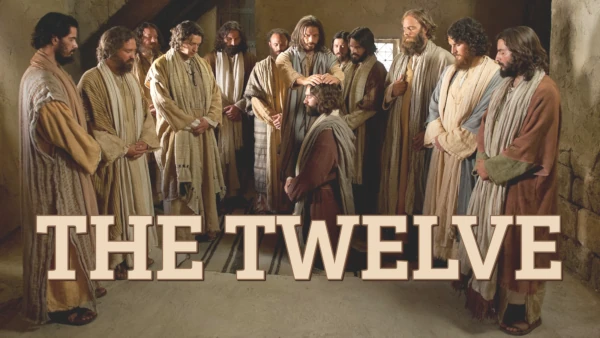
The Twelve apostles of Jesus were not outstanding in any way, at least before they met Jesus. However, Jesus called these men personally. He knew all their flaws, faults, and apprehensions, yet He still chose them.