
Throughout history, God has placed His Spirit upon various people at various times for His good purposes. We see a good example of this in the book of Numbers chapter 11 when God poured out His Spirit upon the leaders of the clans of Israel in response to Moses’ cries for help. But many years afterward, the prophet Joel foretold that God would one day pour out His Spirit upon all people. The fulfillment of that prophecy came just a few days after Jesus ascended back to His Father on the day of Pentecost when the Holy Spirit came upon Jesus’ apostles just as He had promised at the last supper, and reiterated just before He was taken up.
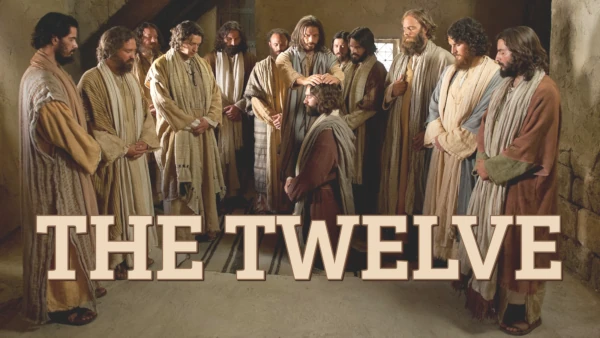

The final three of Jesus’ chosen twelve apostles – James the son of Alphaeus, Simon the sealot, and Thaddaeus – are largely unsung. Almost nothing is written in God’s Word about them apart from the listings of their names among the twelve. Yet we know Jesus chose them specifically for His own perfect reasons. Therefore, they serve as encouragement to those who quietly serve the kingdom of God without any fanfare.

Most of us think of Judas Iscariot as the great villain of the Bible. We revile him nearly as much as we do Satan. Yet Jesus chose Judas to be an apostle. This raises a number of challenging questions and serves as a caution that any of us can fall victim to temptation.

Matthew was by profession a collaborator with the hated Roman occupiers, and tax collectors in general were seen as extortioners and oppressors. Jesus chose Matthew in part due to his skills as a scribe. Matthew immediately and completely obeyed Jesus’ command to follow Him.

Thomas gets a bad rap and the common nickname “Doubting Thomas” due to the well-known stories from the gospel of John in which Thomas first refused to believe the other apostles’ report about the resurrected Jesus appearing to them, and then a week later Jesus’ mild rebuke of Thomas saying, “Be not unbelieving, but believing.” But does Thomas really deserve our scorn and ridicule. After all, the other apostles refused to believe the report from the women to whom Jesus appeared at the empty tomb until He appeared to them later. Furthermore, once Thomas touched and saw the resurrected Jesus for himself, his faith in the Gospel was fulfilled as he fell down in worship declaring, “My LORD and my God!”

The name Nathanael isn’t found in the Biblical listings of Jesus’ twelve chosen apostles. Most likely, Nathanael was the given name of Bartholomew – son (Aramaic “bar”) of Tolmai. From the story of his calling we find in John 1:43-51, we can safely infer that Nathanael was a close friend of Philip. From that story, we also learn that Nathanael was from Cana in Galilee where Jesus transformed the water into wine – the first miracle Jesus performed during His earthly ministry. Nathanael was also present with six other disciples of Jesus at the Sea of Galilee on the day Jesus took Peter aside to restore him after his denial on the night Jesus was betrayed.

Our information from scripture about Philip is limited, so we need to infer what we can about Philip from these few mentions of him taking care not to read anything into the scripture. We see that Philip was called directly and individually by Jesus to be one of His apostles. We also see in the story of the feeding of the 5,000 that Philip was somewhat pedantic and literal in his understanding of the lessons Jesus taught him. When he was approached by some Greeks who wished to see Jesus, Philip was cautious. It wasn’t Philip’s nature to be brash and decisive like Peter and the sons of Zebedee.

Before we launch into our study of the twelve men Jesus chose from among His disciples to be apostles, it is important to make a distinction between Jesus’ hundreds or thousands of disciples and the twelve He chose to empower and send forth as His representatives in the ancient world. We also often overlook the fact that many of Jesus’ disciples were women. God’s Word gives us several lists of these women who followed Jesus and served Him during His earthly ministry.