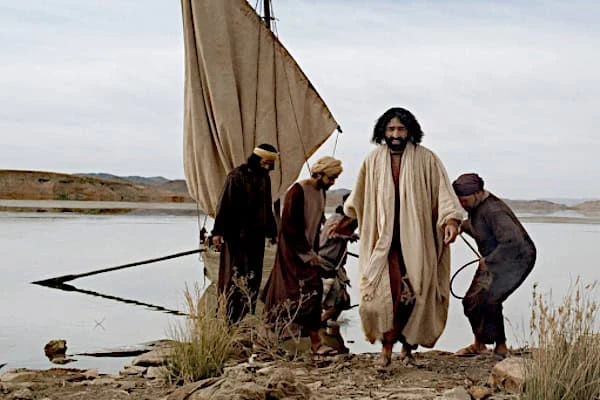
When Jesus’ disciples asked who is the greatest in His Kingdom, Jesus showed them a little child and proclaimed that if we don’t come to Him with childlike faith, we cannot even enter His Kingdom, much less be great in it. We can do nothing to earn our salvation. We must simply believe in Him and His Gospel unreservedly as an innocent child believes.

As we celebrate Fathers Day, it is helpful to look at how Jesus modeled His own relationship with His father during His ministry on Earth. The defining characteristic of that relationship is connection. Jesus was in continual communication with His Father as He accomplished the mission on Earth that He was given by God the Father. Then, by dying on the cross in our place, Jesus made the way for us to enter into that same kind of relationship with God.

In finishing up our series on God’s grace, it’s important to remember that it is certainly God’s grace alone through which we are saved out of death in our sins – His saving grace, and His grace is sufficient for us to carry us through whatever we might encounter in this life – His sustaining grace. Along the way, God’s grace is perfecting us day-by-day into the very image of God’s Son Jesus – His sanctifying grace. Finally, throughout this life and our eternal life to come, God’s grace is and will forever be poured out in infinite measure upon His children who have believed on the Name and Gospel of Jesus for salvation – God’s securing grace.

sustaining grace, God will always provide for our needs and give us the strength we need to sustain us through times of hardship. Jesus Himself confirmed this truth in His Sermon on the Mount (Matthew 6:25-34). Yet we must be careful to note that God never promised that we would not encounter troubles in this life, but that by His infinite grace He will always sustain us through them.

God has chosen each of His followers for His specific purposes. Some of us will seem to move from blessing to blessing while others will have to endure seemingly endless sorrows and frustrations. From time to time, most of us question God’s purposes as we make our way along the path God has ordained for us. We are tempted to compare our own lives with those of others – particularly other believers. In such seasons, we need to always remember that God is sovereign in all things and He is always working His perfect plans in our lives and through our lives. So instead of comparing our own circumstances with those of others, we must seek to learn God’s purpose in the things He has led us to and move confidently in assurance that whatever God has led us to He will also lead us through for His own glory.

The final three of Jesus’ chosen twelve apostles – James the son of Alphaeus, Simon the sealot, and Thaddaeus – are largely unsung. Almost nothing is written in God’s Word about them apart from the listings of their names among the twelve. Yet we know Jesus chose them specifically for His own perfect reasons. Therefore, they serve as encouragement to those who quietly serve the kingdom of God without any fanfare.

Matthew was by profession a collaborator with the hated Roman occupiers, and tax collectors in general were seen as extortioners and oppressors. Jesus chose Matthew in part due to his skills as a scribe. Matthew immediately and completely obeyed Jesus’ command to follow Him.

Our information from scripture about Philip is limited, so we need to infer what we can about Philip from these few mentions of him taking care not to read anything into the scripture. We see that Philip was called directly and individually by Jesus to be one of His apostles. We also see in the story of the feeding of the 5,000 that Philip was somewhat pedantic and literal in his understanding of the lessons Jesus taught him. When he was approached by some Greeks who wished to see Jesus, Philip was cautious. It wasn’t Philip’s nature to be brash and decisive like Peter and the sons of Zebedee.

John – who refers to himself as “the disciple whom Jesus loved” – was the human scribe who wrote five books of the New Testament. John was part of Jesus’ inner circle of chosen apostles who was present at the Mount of Transfiguration along with his brother James, and Simon Peter. From the cross before He died, Jesus entrusted the care of His mother Mary to John. Of the remaining 11 after Judas Iscariot died, only John was not put to death for his Gospel testimony as far as we know from the scripture itself.

Jesus gave the two sons of Zebedee – James and John – the nickname Boanerges meaning “Sons of Thunder.” Although this name is found only once in scripture, we are intrigued by it because we can imagine several reasons why Jesus might have tagged the brothers with it. James (sometimes called James the greater) was one of three apostles in Jesus’ so-called “inner circle” along with his brother John and Simon Peter. These three were present with Jesus when He was transfigured before them. This inner circle were among seven of The Twelve to whom Jesus appeared on the shore of the Sea of Galilee following His resurrection. After Jesus ascended to His father, James was one of the leaders of the early church in Jerusalem. Of course, Judas Iscariot was the first of the twelve to die, but James Son of Zebedee became the first of the twelve to be martyred for his Christian testimony when Herod had him executed.