
Matthew 15 records some miracles performed by Jesus – casting a demon out of the daughter of a gentile woman of Tyre, and feeding 4000 in the region of Decapolis.
Matthew 15 records some miracles performed by Jesus – casting a demon out of the daughter of a gentile woman of Tyre, and feeding 4000 in the region of Decapolis.
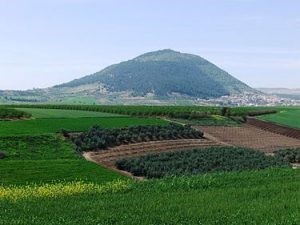
As we read God’s Word, it is helpful for us to have a mental picture of the locations of the places mentioned in the Biblical text, their positions in the land relative to each other, and the distances which separate them from each other. So it is worthwhile to spend a little time looking at maps of the Middle East region, the Levant, the State of Israel, and the province of Galilee.
In Matthew 15:1-20, Jesus was challenged by Pharisees from Jerusalem about why His disciples did not wash their hands before eating. Jesus turned their accusation back around asking why they imposed a man-made tradition on the people that led them to disobey the 5th Commandment to honor father and mother. Then Jesus explained to His disciples that it is not the physical cleanliness of what we allow into our mouths that defiles us, but the evil words we allow out of our mouths from the fullness of our hearts which defiles us.
This is part 2 of our review/recap of Matthew chapters 1-14.
We will pick back up with our study through Matthew’s Gospel on Sunday Evenings. This video is a recap designed to bring everyone back up to speed.

Jeremiah’s story provides us with a picture of how Jesus’ ministry would unfold. Not only was Jeremiah a prophet called by God to speak truth to His people, but he also served as a “type” of Christ that would help us learn and grow in the discipline of perseverance. People who persevere make the right choice, they stand by their convictions, they make sure their character remains intact, and they refuse to compromise on God’s truths.

One of the basic considerations of our faith is that of working in cooperation with other followers of Christ. In the last thirty years, mainstream Christian denominational memberships have declined more than 20%. This should do more than just alarm us. It should motivate us into action. We have a duty to cooperate with each other, serve those in need, serve alongside other Christian churches, serve our association, our state convention, and our national convention. We must never forget that we are in this fight together! Even though Satan is the ruler of this world, it doesn’t mean we should sit idly by and let him continue his work of destroying our ministries.

We need to look at salvation and what it really means for the person who chooses God over self. Our salvation has more to do with Him than it does with who we are. Yes, we are special and the greatest of His creation, but our salvation demonstrates the mercy and grace of a loving God.
Jesus did not give us lip service. He gave us His life. On Calvary’s cross He laid it all down. He left the glory of heaven for the work of the cross. He surrendered to the agony of the cross, all for love, so that you and I could one day inherit eternal life. If He held nothing back for you, why would you hold back anything from Him? What does your stewardship say about the authenticity of your faith? What does it say about where your trust really is? What does it say about your heart?

Holy is the way God is. To say that He is holy means he doesn’t conform to a standard but is instead, THE STANDARD! 1 Peter 1:13-17 expresses a non-negotiable call to holiness, which involves a change of heart and in turn a change in life. To be more holy doesn’t mean that a person cannot sin. Instead, it means a person must, through the power of the Holy Spirit, choose not to sin. Holiness is a deliberate choice to seek wholeness in the world. We must remove old habits and develop new ones. When a person understands the truth about Biblical Holiness, it becomes the most desirable possibility in all human experiences.
Sunday School - 9:30 AM
Sunday Worship - 10:30 AM
Sunday Evening - 6:00 PM
©
2026
Mt. Freedom Baptist Church
We are to live each day on mission. From beginning to end, our day is to be lived with God’s Kingdom in mind. In Matthew 28 Jesus said to “Go into ALL the world.” Go into our local community, our state, our nation, and every corner of the world with the life-giving good news that can only be found in a genuine relationship with Jesus Christ!
God never intended for man to be alone. He understands how much we need each other and intends for us to live life together as a community of believers. We are to share in the messy, painful, and difficult circumstances we face on a day-to-day basis. Also, we are to share the merciful, grace filled, joyful, and peaceful times as well. We desire to be genuine, compassionate, loving, forgiving, and serving people, just like Jesus.
Everything we think, say, or do is rooted in the Gospel of Jesus Christ. Who we are, how we live, and why we exist is because of His finished work on the cross, in the tomb, and as the risen King. This knowledge is the foundation for our lives. The Gospel is not a compartment of our lives, but the life-giving source from which we daily consume.